January 15, 2026
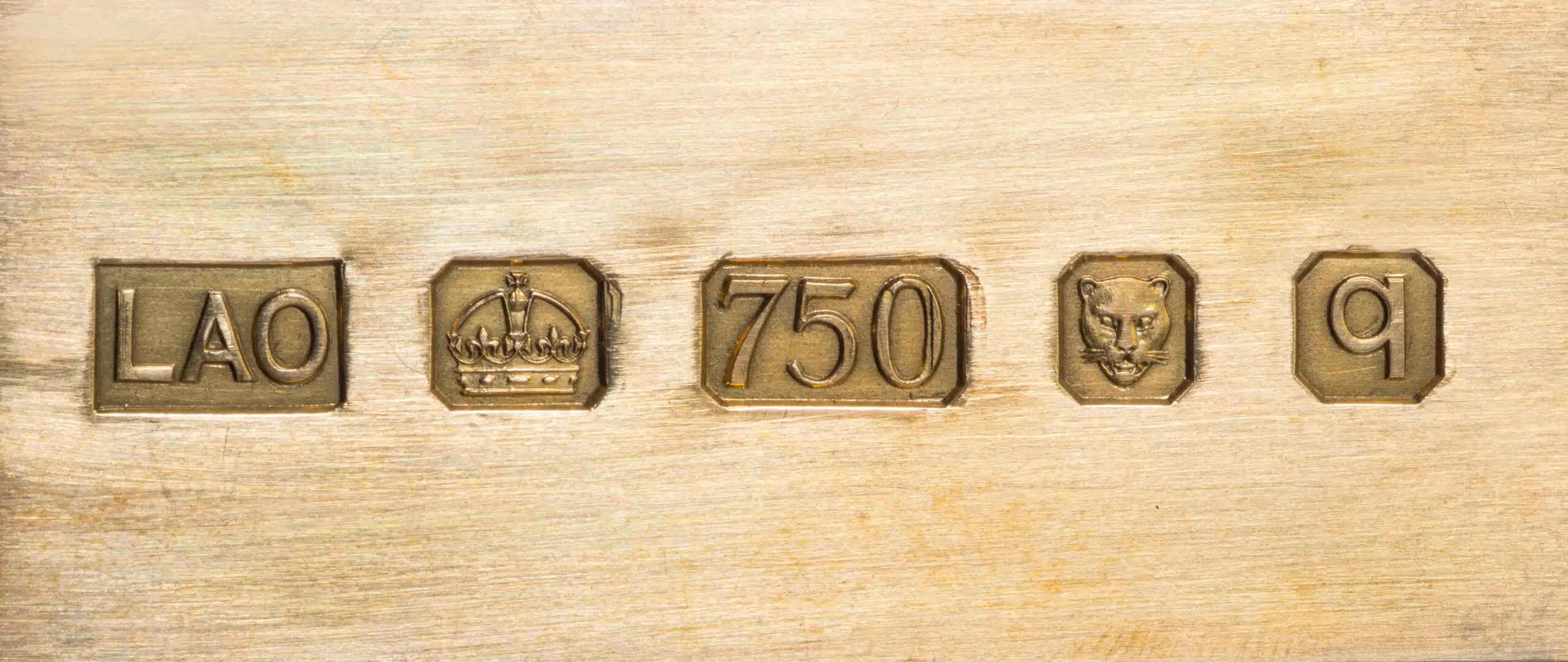
A hallmark is an official stamp applied to precious metal items to confirm the metal’s fineness (purity). In many markets—particularly the UK—hallmarking is a long-established system designed to protect consumers and provide confidence in what is being purchased or worn.
A hallmark is not the same as a brand mark or maker’s mark. It is primarily about metal purity verification, though it often includes additional identifiers.
Hallmarking in the UK has its roots in medieval consumer protection. The system developed to prevent fraud in precious metals and to ensure gold and silver items met agreed standards, with hallmarking in England commonly traced to reforms formalised around 1300 and the long-standing role of London’s Goldsmiths’ Company in testing and marking wares.
Today, the UK’s hallmarking framework is overseen by the British Hallmarking Council and delivered through four operating assay offices: London, Birmingham, Sheffield, and Edinburgh. Historically, a number of additional assay offices operated around the country, reflecting regional trade and manufacturing centres. These included Chester (closed 1962) and Glasgow (closed 1964), along with offices in Exeter, Newcastle, and York (which closed in the 19th century).

While hallmark formats vary by country and by piece, the information typically falls into these categories:
Metal fineness (purity)
This is the most important element. Examples include:

Assay office / testing authority
This indicates where the piece was tested and hallmarked.
Maker’s or sponsor’s mark
Usually a registered mark identifying the company responsible for submitting the piece for hallmarking.
Date letter
Some hallmarking systems include a date letter. Not all pieces carry one, and formats depend on the assay office and period.
Because the marks are small, they can be faint, partially worn, or placed in areas that are hard to see—particularly on older pieces.

Hallmarks are usually placed where they are discreet but practical:
If you can’t find a hallmark, it doesn’t automatically mean there isn’t one—some are extremely worn, hidden by design, or placed on removable components.

A hallmark is an official fineness mark applied under a recognised hallmarking system to confirm precious metal purity. Traditionally, hallmarks were struck into the metal with a punch, leaving a small indented stamp. Many pieces still carry these struck marks, which can soften over time through wear and repeated polishing.
Some modern pieces may also feature laser-inscribed hallmarks, where the hallmark is etched onto the surface rather than punched in. A laser inscription is typically cleaner and more precise, but it is also generally shallower than a struck stamp.
It’s important to distinguish these from non-hallmark laser markings (such as workshop references, brand identifiers, or service notes). These are not official purity marks and, because they sit very close to the surface, they can polish out very easily during refinishing.
There are several common reasons:
A hallmark that looks faint is not automatically a red flag; it often reflects normal wear and finishing.
This is one of the most common questions we hear—especially when a ring has had structural work.
In everyday practice, repairs are treated differently from manufacturing a new piece, and many repair operations do not typically require re-hallmarking. This commonly includes repair work such as shank replacement or shank rebuilds, provided the work is considered a repair to an existing item rather than the creation of a new article.
Bring a piece in if:
A quick in-person review can often clarify what you’re looking at and what it means for care, valuation, and repairs.
If you’d like help identifying hallmarks—or you have a piece that needs assessment for repair, resizing, or restoration—our team will be pleased to advise. Understanding the stamps in your jewellery is a small detail that can provide genuine confidence in what you own.

Book a Consultation
If you need assistance finding the perfect gift or selecting your engagement ring, our experts are always here to help you.
