
June 29, 2026
In an era dominated by temporary digital signatures and fleeting interactions, there remains an extraordinary, enduring medium that binds individual legacy to a physical object: the hand-engraved seal. When looking closely at a bespoke signet ring alongside its crisp, raised wax impression, one is looking at much more than a fine piece of jewelry. It is a living, three-dimensional link to centuries of human heritage.
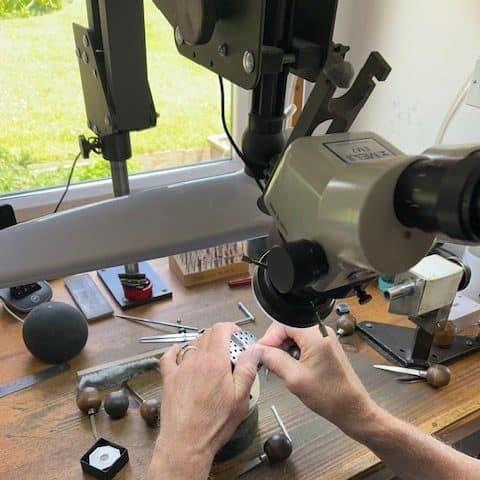
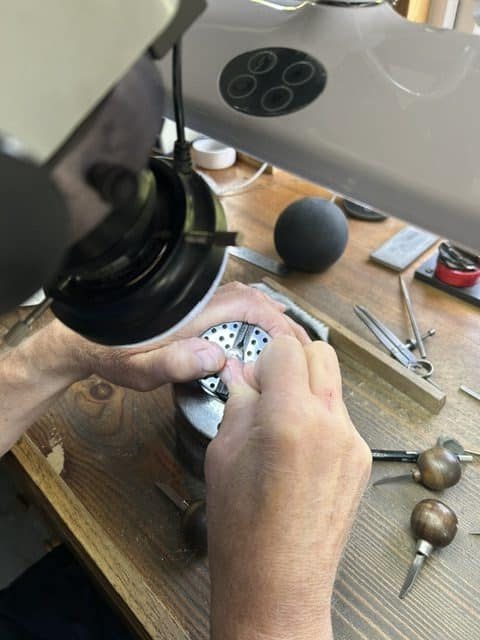
Seal engraving represents one of humanity’s oldest continuous art forms. It demands an astonishing level of mastery from a specialist hand engraver, who must carve complex, highly detailed heraldic designs in reverse into precious metal. To understand why this practice continues to hold such profound significance today, we must look backward into the history of the seal, the development of the family crest, and the meticulous process that transforms gold into a personal legacy.
Long before literacy was widespread, and centuries before the advent of secure biometric identification, the seal was the ultimate guarantor of authenticity, authority, and identity. From the ancient cylinder seals of Mesopotamia to the scarab seals of ancient Egypt, prominent figures used unique markings pressed into soft clay to secure property, authorize laws, and validate official correspondence.
By the medieval period in Europe, the practice had evolved into an essential instrument of statecraft and law. Every monarch, nobleman, and high-ranking ecclesiastic possessed a personal seal. Documents were not “signed” in the modern sense; instead, hot wax was dropped onto the parchment, and the owner’s seal was firmly pressed into it.
If a seal arrived intact, the recipient knew with absolute certainty that the document had not been opened or tampered with en route. To forge a seal was considered an act of high treason, punishable by the most severe penalties. Consequently, the craftsmen who carved these seals were held in the highest esteem, trusted explicitly with the visual identity of kingdoms and empires.
The Power of Intaglio True seal engraving utilizes the “intaglio” technique. Unlike surface engraving, which merely scratches a design onto metal, intaglio requires carving deeply into the material. The design is cut in reverse (a mirror image), meaning that when it is pressed into hot wax, the resulting impression is raised, displaying the artwork in its correct orientation with exquisite, three-dimensional depth.
While the legal requirement for wax seals has faded into history, the symbolic power of the signet ring has only grown stronger. Today, the commission of a hand-engraved seal ring is rarely about signing state treaties; rather, it is a deliberate celebration of family identity, personal history, or a milestone achievement.
A bespoke seal-engraved ring acts as a quiet counterweight to modern consumer culture. It is an object explicitly designed to outlive its owner, gaining character, history, and deep sentimental value as it is passed down from parent to child through the generations. It tells the world who you are, where you come from, and what you stand for.
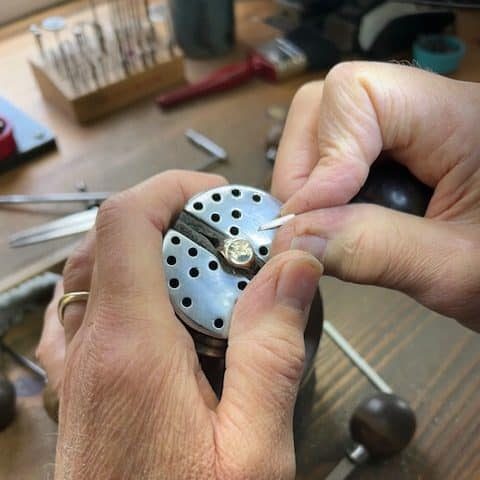
The absolute pinnacle of this craft lies in the hands of the specialist hand engraver. In a world saturated with automated computer-aided design (CAD) and mechanical laser engraving, true hand engraving remains rare, requiring decades of dedicated practice to perfect.
Laser engraving cuts flat, clinical lines of uniform depth into metal. In contrast, a master engraver uses solid steel gravers, pushing the tool through the metal by hand with varying angles and pressure. This human touch brings a vital, organic fluidity to the design:
Are you ready to carve your own mark in history? Whether you possess an ancient family crest that you wish to revive, or you desire to design a completely modern emblem that represents the beginning of your own family tradition, we invite you to experience this timeless journey. Speak with our team today to commission a piece of history carved entirely by hand, built to endure for centuries to come.

Book a Consultation
If you need assistance finding the perfect gift or selecting your engagement ring, our experts are always here to help you.
