July 1, 2026
One of the first decisions to make is whether to choose a lab-grown diamond bracelet or a natural diamond bracelet.
Both lab-grown and natural diamonds are real diamonds. They have the same sparkle, brilliance and durability, but they are formed in different ways.
Natural diamonds are created deep within the earth over millions of years. They are valued for their rarity, history and traditional appeal. For many customers, a natural diamond bracelet feels like a classic investment piece — something to treasure and potentially pass down through generations.
Lab-grown diamonds are created in controlled laboratory conditions using advanced technology. They offer the same visual beauty as natural diamonds, but often allow customers to choose a larger or higher-specification bracelet for their budget. This makes lab-grown diamond line bracelets a popular choice for those looking for impressive sparkle and modern value.
There is no right or wrong choice. The best option depends on what matters most to you: rarity, tradition, size, budget, or the story behind the piece.

Before choosing a diamond line bracelet, think about how it will be worn.
Will it be an everyday bracelet, a statement piece for special occasions, or a significant gift for an anniversary, birthday or milestone celebration?
For everyday wear, many customers prefer a bracelet with a slightly lower profile, secure setting and practical clasp. It should feel comfortable on the wrist and sit neatly alongside a watch or other bracelets.
For special occasions, you may want to choose a higher carat weight or a design with more presence. A diamond line bracelet can be beautifully striking while still feeling refined and elegant.
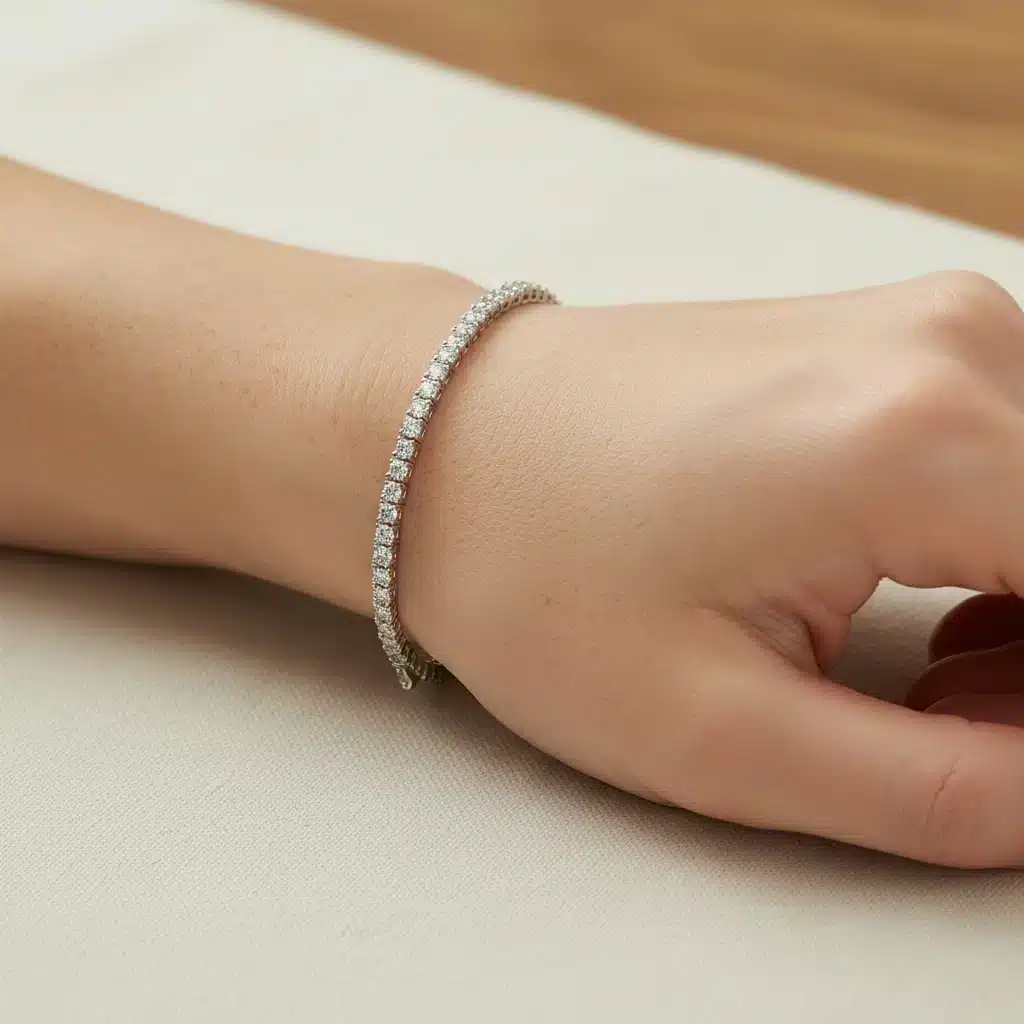
The total carat weight of a line bracelet refers to the combined weight of all the diamonds in the bracelet, rather than one individual stone.
A delicate bracelet with smaller diamonds can look subtle, elegant and easy to wear every day. A higher carat weight will create a bolder, more luxurious look with greater impact on the wrist.
This is where lab-grown diamonds can be particularly appealing. Because they often offer strong value compared with natural diamonds, you may be able to choose a larger total carat weight or higher diamond quality within your budget.
Natural diamond bracelets, meanwhile, appeal to those who value rarity and the traditional prestige associated with natural stones.
When choosing carat weight, consider the wearer’s personal style. Some people love fine, understated jewellery. Others prefer a bracelet that catches the light from across the room.
As with engagement rings and other diamond jewellery, the quality of the diamonds in a line bracelet matters.
The key things to consider are:
Cut: This affects how much the diamonds sparkle. Well-cut diamonds reflect light beautifully and give the bracelet its brilliance.
Colour: Diamonds are graded by colour, with whiter diamonds often being more desirable. For a line bracelet, consistency is important so the stones look even across the wrist.
Clarity: This refers to the natural marks or inclusions within the diamond. In a bracelet, the diamonds are usually smaller than in a centre-stone ring, so the overall sparkle and matching of the stones are often more important than focusing on each diamond individually.
Matching: A quality diamond line bracelet should have diamonds that look balanced in size, colour and brilliance. This creates the smooth, continuous sparkle that makes this style so attractive.

The metal you choose will have a big effect on the overall look of your bracelet.
White gold is a classic choice for diamond line bracelets because it enhances the bright, icy sparkle of the diamonds.
Yellow gold gives the bracelet a warmer, more traditional feel and works beautifully for those who already wear yellow gold jewellery.
Rose gold offers a softer, romantic look and can be a lovely option for a modern yet feminine style.
Platinum is highly durable and naturally white, making it a premium choice for those who want strength and longevity.
When choosing the metal, think about the jewellery the wearer already owns. A bracelet that complements their rings, watch, necklaces or earrings will be easier to wear often.

The setting is what holds each diamond in place, but it also affects the appearance and practicality of the bracelet.
A claw setting allows plenty of light to enter the diamonds, helping maximise sparkle. It is a classic choice for diamond tennis bracelets.
A rubover or bezel setting surrounds each diamond with metal, creating a sleek look and offering extra protection around the stones. This can be a practical option for everyday wear.
The best setting depends on the style you like and how often the bracelet will be worn. For a bracelet that will be worn regularly, security and comfort are just as important as appearance.
A diamond line bracelet should sit comfortably around the wrist without being too tight or too loose.
If it is too tight, it may feel uncomfortable and restrict movement. If it is too loose, it can move around too much and may be more vulnerable to knocks or catching.
As a general guide, the bracelet should have a little movement but still feel secure. When buying as a gift, it is helpful to know the wearer’s wrist size or bring in a bracelet they already own for comparison.
At Charles Nobel Jewellers, our team can help advise on fit, sizing and comfort so the bracelet feels right from the moment it is worn.
A diamond bracelet is a precious piece, so the clasp matters.
Look for a secure clasp that feels strong and easy to fasten. Many quality diamond line bracelets include an additional safety catch or double security feature for peace of mind.
This is especially important if the bracelet will be worn often. A secure fastening helps protect the piece and allows the wearer to enjoy it with confidence.

A lab-grown diamond bracelet is an excellent choice for many customers, especially if you want a luxurious look with impressive brilliance.
Lab-grown diamonds are particularly well suited to line bracelets because the design uses multiple diamonds. Choosing lab-grown can make it easier to achieve a more substantial look without compromising on sparkle.
They are ideal for birthdays, anniversaries, milestone gifts, bridal jewellery, or simply as a special piece to add to your own collection.
A natural diamond bracelet remains a classic option. For many people, the appeal lies in the rarity and history of the diamonds themselves.
Natural diamond line bracelets make beautiful heirloom pieces and are often chosen for significant occasions such as major anniversaries, landmark birthdays or once-in-a-lifetime gifts.
If tradition, rarity and classic sentiment are important to you, a natural diamond bracelet may be the right choice.
When choosing between a lab-grown or natural diamond set line bracelet, ask yourself:
Do I want the largest or most striking bracelet for my budget?
Do I prefer the rarity and tradition of natural diamonds?
Will the bracelet be worn every day or mainly for special occasions?
What metal colour does the wearer usually choose?
Is the clasp secure and the bracelet comfortable?
Do I want something subtle, or something with more impact?
Answering these questions will help narrow down your options and make the decision feel much easier.
At Charles Nobel Jewellers in New Milton, we can help you choose a diamond set line bracelet that suits your style, budget and occasion.
Whether you are considering a lab-grown diamond bracelet for modern sparkle and value, or a natural diamond bracelet for timeless rarity and tradition, our team can guide you through the options with honest, expert advice.
Visit us in-store or browse online to discover our collection of diamond line bracelets and find a piece made to be treasured.

Book a Consultation
If you need assistance finding the perfect gift or selecting your engagement ring, our experts are always here to help you.
